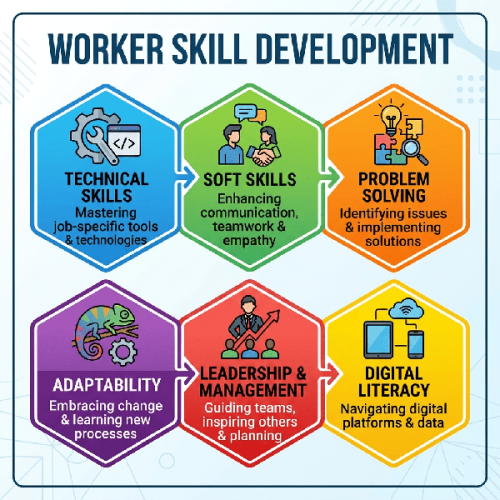
In modern manufacturing, Worker Skill Development is no longer just a Human Resources function—it is a core operational strategy. With the rise of advanced manufacturing automation, data-driven factories, and shifting supply chains, the gap between a factory's technical needs and available workforce skills is widening.
Developing frontline workers directly improves productivity, slashes defect rates, enhances workplace safety, and lowers turnover.
The Strategic Framework: Upskilling vs. Reskilling
To build an agile workforce, manufacturing leaders focus on two distinct training pathways:
-
Upskilling: Teaching workers new skills to improve their performance in their current role—such as training a manual machinist to operate a newer, multi-axis computer numerical control (CNC) machine.
-
Reskilling: Training an employee for a completely different role within the organization—such as training an assembly line operator whose job has been automated to become a maintenance technician or quality inspector.
4 Effective Manufacturing Training Methodologies
Implementing a successful development program requires a blend of hands-on experience, structured mentoring, and modern learning technology.
1. The TWI (Training Within Industry) Job Instruction Method
Developed during World War II and adopted heavily by Japanese manufacturers as part of Lean operations, TWI remains the gold standard for floor training. It breaks training into four structured steps:
-
Step 1: Prepare the worker. Put them at ease, state the job, and find out what they already know.
-
Step 2: Present the operation. Tell, show, and illustrate one important step at a time, stressing the key safety and quality points.
-
Step 3: Try out performance. Have the worker do the job, correct errors immediately, and have them explain the key steps back to you to ensure true comprehension.
-
Step 4: Follow up. Put them on their own, designate who they go to for help, and check in frequently.
2. Cross-Training and Skill Matrices
A Skill Matrix is a visual tool used to map out the skills individual team members possess and the skills the factory requires.
-
It tracks proficiency levels (e.g., Level 1: In training; Level 2: Can do independently; Level 3: Can train others).
-
By intentionally cross-training employees across multiple workstations, factories eliminate single-point-of-failure bottlenecks (like when the only worker who knows how to calibrate a specific machine goes on leave) and keep floor work dynamic.
3. Apprenticeships and Vocational Partnerships
Collaborating with local industrial training institutes, polytechnics, and vocational schools ensures a steady pipeline of job-ready talent. Modern apprenticeship programs combine classroom technical knowledge (like basic robotics or blueprint reading) with paid, on-the-job training.
4. Digital & Immersive Learning Tools
-
Microlearning: Breaking complex training manuals into 3-to-5-minute video modules accessible via mobile devices or floor kiosks, allowing workers to solve problems in real-time.
-
Augmented Reality (AR): Operators wearing smart glasses can see step-by-step assembly guides or maintenance diagrams overlaid directly onto the physical machine they are working on, significantly accelerating the learning curve.

krishna
Krishna is an experienced B2B blogger specializing in creating insightful and engaging content for businesses. With a keen understanding of industry trends and a talent for translating complex concepts into relatable narratives, Krishna helps companies build their brand, connect with their audience, and drive growth through compelling storytelling and strategic communication.