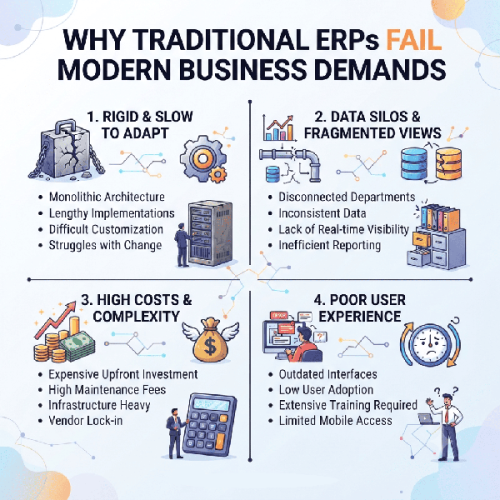
Traditional Enterprise Resource Planning (ERP) systems were designed in an era when business moved slowly, data was localized, and stability mattered far more than speed.
Today, that foundation is cracking. Modern businesses operate in a hyper-connected, fast-changing environment that exposes the foundational flaws of these older monolithic platforms. According to industry studies, nearly 50% to 75% of traditional ERP implementations fail to meet their original business objectives because they cannot keep pace with modern operational requirements.
Traditional ERP systems struggle to keep pace with modern business requirements for several key reasons:
1. Inflexibility and the "Version Lock" Trap
Traditional ERPs are highly monolithic, meaning all features are bundled together into a single, massive codebase. Over the years, companies heavily customized these systems to fit specific workflows. However, these deep code alterations mean that upgrading the system breaks the customizations.
-
The Reality: Companies become "version-locked"—trapped using outdated software because a core upgrade would cost millions and risk breaking active business operations.
2. Siloed Data and Lack of Real-Time Analytics
Modern business requires instant data to handle rapid supply chain shifts. Traditional ERPs rely on batch processing (processing data in chunks at scheduled intervals, like overnight) rather than real-time updates.
-
The Reality: Leaders are forced to make decisions based on yesterday's numbers, or they spend valuable hours manually pulling data into external spreadsheets just to get an accurate view of current inventory, sales, or cash flow.
3. The Shift from Monoliths to Microservices
Historically, businesses looked for an "all-in-one" suite. Today, the strategy has shifted toward agility. Companies want to pair a core financial system with the absolute best-in-class specialized tools—like specialized CRM, AI-driven logistics, or modern e-commerce platforms.
-
Traditional ERP architecture makes external integration incredibly complex and expensive. Modern systems use flexible APIs (software intermediaries that allow two applications to talk to each other) to plug and play with modern software seamlessly.

krishna
Krishna is an experienced B2B blogger specializing in creating insightful and engaging content for businesses. With a keen understanding of industry trends and a talent for translating complex concepts into relatable narratives, Krishna helps companies build their brand, connect with their audience, and drive growth through compelling storytelling and strategic communication.