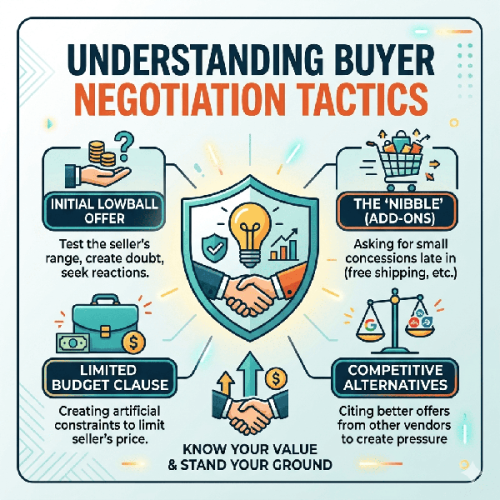
To negotiate effectively, you have to look at the deal from the other side of the table. Professional buyers (procurement officers) often use a "playbook" of psychological and tactical moves to lower your price or extend your payment terms.
Recognizing these tactics is the first step toward neutralizing them.
1. The "Budget Ceiling" (The Hard Limit)
This is the most common tactic. The buyer claims they love your solution, but their budget is strictly capped at a specific number (usually 10–20% below your quote).
-
The Goal: To get you to drop your price without them having to give up any features or services.
-
The Counter: Ask, "If we can't meet that price, which parts of the project scope should we remove to fit the budget?" Never drop the price without dropping the value.
2. The "Cherry Picker"
The buyer asks for a detailed breakdown of your costs (labor, materials, overhead) and then tries to negotiate each line item individually.
-
The Goal: To strip away your profit margins by questioning small details rather than the total value of the solution.
-
The Counter: Refuse to negotiate line items. Reiterate that the pricing is a bundled package and that changing one element affects the integrity and delivery of the entire project.
3. The "Nibble" (The "Oh, One More Thing")
After the deal is seemingly closed and the contract is being signed, the buyer asks for a small "extra" for free—like free shipping, an extra year of support, or slightly faster delivery.
-
The Goal: To squeeze out one last concession when you are emotionally "done" with the deal and likely to say yes just to get it over with.
-
The Counter: Smile and say, "I’d love to include that for you. If we add that, the total will increase by [Amount]. Would you like me to update the invoice?"
4. The "Good Cop / Bad Cop"
You deal with a friendly manager who wants the deal, but they claim their "strict Finance Director" or "VP" won't approve the terms.
-
The Goal: To make you feel like the person you are talking to is your "ally," forcing you to lower your price to "help them" get it past the boss.
-
The Counter: Ask to speak directly to the "Bad Cop" or the decision-maker. If they refuse, stay firm on your terms so your "ally" has to go back and fight for the original deal.
5. The "Auction" (The Phantom Competitor)
The buyer tells you, "Your competitor is offering the exact same thing for 15% less. Can you match it?"
-
The Goal: To trigger your fear of losing the deal and force a defensive price cut.
-
The Counter: Don't lower your price immediately. Ask, "That’s interesting. Shift the conversation back to differentiation, not just price.

krishna
Krishna is an experienced B2B blogger specializing in creating insightful and engaging content for businesses. With a keen understanding of industry trends and a talent for translating complex concepts into relatable narratives, Krishna helps companies build their brand, connect with their audience, and drive growth through compelling storytelling and strategic communication.