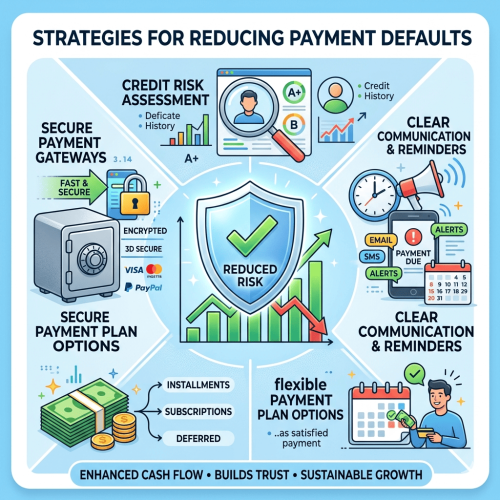
Reducing payment defaults is a critical challenge for business professionals, especially when managing SMEs, digital service contracts, or export logistics. In the 2026 economic landscape, the strategy has shifted from "chasing payments" to preventative automation and data-driven vetting.
1. Implement "Milestone-Based" Escrow
Instead of asking for 100% upfront (which scares buyers) or 100% on completion (which risks your time), use a Digital Escrow model with automated releases.
-
The 30-40-30 Rule: 30% on project kickoff, 40% upon reaching a verifiable mid-point (e.g., a prototype or initial report), and 30% upon final delivery.
-
The Benefit: If a client defaults at the second stage, you stop work immediately, limiting your loss to only a portion of the project rather than the whole.
2. Leverage the 2026 "Account Aggregator" Framework
In India, the Account Aggregator (AA) ecosystem now allows businesses to verify a potential partner's financial health instantly and securely.
-
Vetting Suppliers/Clients: Before entering a high-value contract, request a "Financial Health Summary" through an AA-linked app. This confirms if the entity has the liquidity to pay you, without them having to share sensitive bank statements manually.
-
Credit Scoring: Use integrated GST-based credit scoring tools to check if a business has a history of timely tax filings and debt repayments.
3. Use "Smart" Digital Contracts
Move away from simple PDF agreements to Smart Contracts that integrate with payment gateways.
-
Automated Reminders: Set your system to send "Pre-Due" alerts (3 days before), "Due Today" alerts, and "Overdue" notifications with integrated payment links.
-
Late Fee Automation: Clearly state a late payment penalty in the digital contract. Automated systems can now add this interest to the invoice automatically if the deadline passes, removing the "awkwardness" of manual negotiation.
4. Offer "Early Bird" UPI Incentives
Flip the script on penalties by offering a small "Cashback" or discount for early payments.
-
The 2/10 Net 30 Strategy: Offer a 2% discount if the invoice is paid within 10 days; otherwise, the full amount is due in 30 days.
-
UPI Autopay: For recurring services encourage clients to set up UPI Autopay. This ensures the funds are pulled automatically on the 1st of every month, bypassing the risk of the client "forgetting" to initiate the transfer.

krishna
Krishna is an experienced B2B blogger specializing in creating insightful and engaging content for businesses. With a keen understanding of industry trends and a talent for translating complex concepts into relatable narratives, Krishna helps companies build their brand, connect with their audience, and drive growth through compelling storytelling and strategic communication.