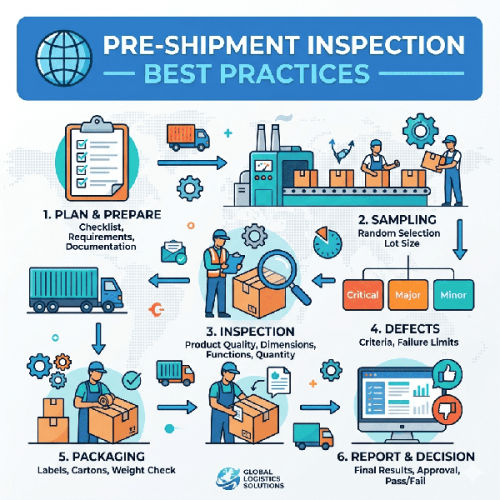
Pre-shipment Inspection (PSI) is the final gatekeeper in your supply chain. It ensures that the goods being loaded onto a container match your specifications, quantities, and quality standards before the final payment is triggered.
1. Use a Statistically Valid Sampling Plan
You cannot inspect every single unit in a large order. Instead, use the ISO 2859-1 standard (AQL - Acceptable Quality Limit).
-
Define Levels: Set specific limits for Critical (0%), Major (typically 1.5%–2.5%), and Minor (typically 4.0%) defects.
-
Random Selection: Ensure the inspector selects cartons from the top, middle, and bottom of the pallets to prevent the factory from "hiding" sub-par goods in the center.
2. Finalize a Detailed Inspection Checklist
Never leave the criteria up to the inspector's discretion. Provide a "Product Specification Sheet" that includes:
-
Physical Attributes: Dimensions, weight, color (use Pantone codes), and material finish.
-
On-Site Testing: Specific "drop tests" for packaging, "rub tests" for logos/printing, and functional tests (e.g., powering on electronics).
-
Quantity Verification: Confirming the total carton count and the units-per-carton match the packing list.
3. Verify Packaging and Labeling
Many shipments are rejected at customs not because of the product, but because of the box.
-
Shipping Marks: Ensure the marks on the outer cartons match your requirements (consignee, gross weight, country of origin).
-
Barcodes: Have the inspector scan the barcodes (EAN/UPC) on-site to ensure they are readable and link to the correct SKU.
-
Compliance Icons: Verify that required symbols (CE, FCC, recycling logos) are printed clearly and correctly.
4. The "80/100" Rule
A PSI should only take place when at least 100% of the goods are produced and at least 80% are packed in their final shipping cartons.
-
Why? If you inspect too early, you cannot verify the packaging quality or ensure that the factory won't swap out units during the remaining production.
5. Photographic and Video Evidence
A written report is not enough. Your PSI report should include:
-
Photos of the factory floor and the total batch.
-
Close-ups of any defects found.
-
Photos of the carton sealing process and the applied security seals.

krishna
Krishna is an experienced B2B blogger specializing in creating insightful and engaging content for businesses. With a keen understanding of industry trends and a talent for translating complex concepts into relatable narratives, Krishna helps companies build their brand, connect with their audience, and drive growth through compelling storytelling and strategic communication.