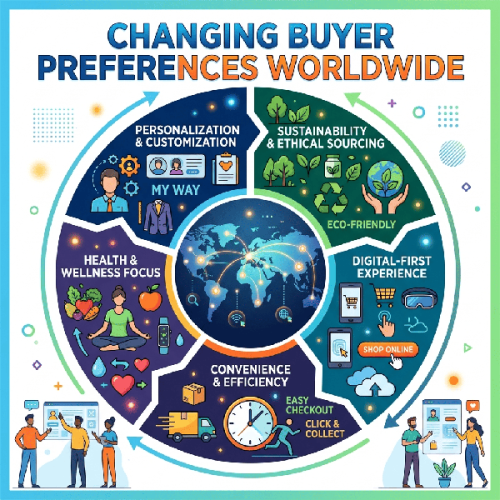
The traditional debate of "Online Marketplaces vs. Traditional Trade" has evolved from a competition into a unified hybrid ecosystem. Retailers are no longer choosing one over the other; instead, they are integrating both to meet the expectations of the modern, "phygital" consumer.
Key Trends Redefining the Relationship
1. The Rise of "Phygital" Retail
Successful businesses in 2026 are blurring the lines between physical and digital. This includes:
-
Omnichannel Journeys: Customers frequently "webroom" (research online, buy in-store) or "showroom" (view/test in-store, purchase online).
-
Unified Experiences: Stores are evolving into hubs for brand activations, events, and community gathering, while online platforms are increasingly using Augmented Reality (AR) to allow customers to "try on" products virtually.
2. The Strategic Role of Marketplaces
Large marketplaces (like Amazon or regional equivalents) remain the "entrance door" for many startups and small businesses due to their massive organic traffic. However, savvy brands are using these platforms to acquire customers while simultaneously investing in their own independent e-commerce sites to:
-
Retain Data Ownership: Direct channels allow brands to own customer insights and build genuine loyalty.
-
Increase Margins: Avoiding the high commissions associated with major third-party platforms.
3. Operational Synergy
The most competitive retailers are those that optimize their supply chains to serve both channels:
-
Micro-Fulfillment: Using physical stores or "dark stores" as local distribution hubs to enable ultra-fast delivery (sometimes in minutes).
-
Click-and-Collect: Allowing customers to purchase online and pick up instantly in-store, combining the ease of digital browsing with the speed of physical collection.
Which Model is Right for You?
In 2026, the question is not which one is "better," but how to balance them based on your business stage and goals:
-
For Early-Stage Businesses: Start with marketplaces to leverage their existing traffic and build brand awareness with lower initial capital investment.
-
For Scaling Brands: Invest in a hybrid approach. Build a robust independent digital presence to capture data and loyalty, while using physical or "pop-up" spaces to build brand trust and provide hands-on product experiences.
-
For Established Retailers: Focus on total integration. Ensure your digital and physical inventory systems are synced, and your staff is equipped to assist customers who may have started their journey online.

krishna
Krishna is an experienced B2B blogger specializing in creating insightful and engaging content for businesses. With a keen understanding of industry trends and a talent for translating complex concepts into relatable narratives, Krishna helps companies build their brand, connect with their audience, and drive growth through compelling storytelling and strategic communication.