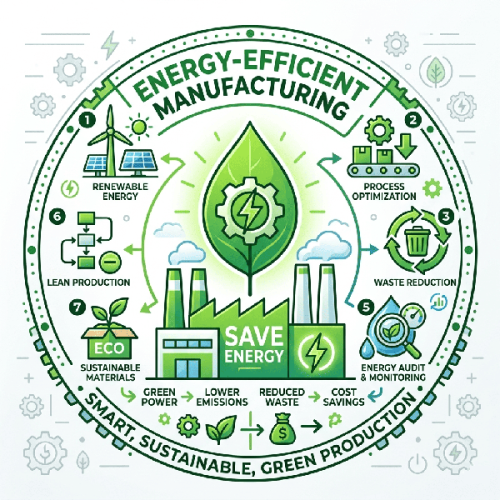
Energy-efficient Manufacturing is the practice of reducing the amount of energy required to manufacture products, thereby lowering operational costs, minimizing carbon footprints, and boosting overall competitiveness.
With industrial power consumption accounting for more than one-third of global energy use, optimizing how a plant draws, converts, and utilizes power is a primary pillar of modern smart factories.
5 High-Impact Areas for Industrial Energy Reduction
The majority of energy waste in a production facility happens across five foundational utility and process areas. Targeting these usually yields the fastest return on investment (ROI):
1. Compressed Air Systems Optimization
Compressed air is often called the "fourth utility" in factories because it is highly versatile but incredibly inefficient—nearly 90% of the electrical energy going into an air compressor turns into wasted heat rather than usable air pressure.
-
Leak Detection: On average, a typical factory loses 20% to 30% of its compressed air capacity to simple line leaks. Regular ultrasound leak audits can pinpoint these instantly.
-
Pressure Reduction: Lowering the generation pressure by just 1 bar (around 14.5 psi) reduces compressor power consumption by approximately 7%.
2. High-Efficiency Motors & Variable Speed Drives (VSDs)
Electric motors drive the fans, pumps, compressors, and conveyors that power a plant floor.
-
IE3/IE4 Motor Upgrades: Upgrading legacy motors to premium efficiency classes (like International Efficiency IE3 or IE4) significantly reduces baseline electrical drag.
-
Variable Speed Drives (VSDs): Traditional motors run at 100% capacity even when the process only requires 50% flow. Adding a VSD adjusts the motor’s speed to match actual, real-time load demand, saving up to 50% of the energy on centrifugal pump and fan applications.
3. Waste Heat Recovery (WHR)
Industrial processes generate massive amounts of thermal energy that are typically vented directly into the atmosphere through exhaust stacks.
-
Heat Exchangers: Capturing hot exhaust from boilers, furnaces, or ovens and routing it through an industrial heat exchanger can preheat boiler feed-water or heat the facility itself, reducing the primary fuel load.
4. Smart Industrial Lighting
While process machinery pulls the most power, facility-wide lighting still represents a significant portion of ambient electrical expenses.
-
LED Retrofitting: Replacing legacy High-Intensity Discharge (HID) or fluorescent fixtures with industrial LEDs instantly slices lighting power consumption by 50% to 70%.
-
Occupancy & Daylight Sensors: Ensuring high-bay warehouse spaces or infrequently occupied tooling rooms are only illuminated when workers are physically present.
5. Smart Building & Process Automation
-
Energy Management Systems (EMS): Deploying smart meters and IoT sensors across individual production lines allows plant managers to track exactly which machine is drawing excess power.
-
Peak Demand Shaving: Scheduling energy-intensive operations (like thermal curing or heavy raw-material crushing) during off-peak utility hours to avoid steep peak-demand penalty charges from the grid.

krishna
Krishna is an experienced B2B blogger specializing in creating insightful and engaging content for businesses. With a keen understanding of industry trends and a talent for translating complex concepts into relatable narratives, Krishna helps companies build their brand, connect with their audience, and drive growth through compelling storytelling and strategic communication.