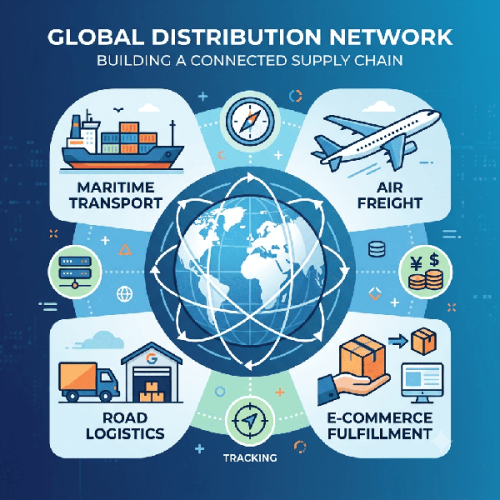
Building a global distribution network is a strategic, multi-phased undertaking that requires balancing market reach, operational efficiency, and cost. It is rarely a "one-size-fits-all" solution; rather, it is a complex logistics architecture designed to move products from production to the final consumer seamlessly across borders.
1. Core Strategic Pillars
Before selecting shipping routes or warehouse locations, you must establish the foundation of your network:
-
Market Prioritization: Determine which markets are your primary targets versus secondary targets. Focus resources where demand density is highest to maximize ROI.
-
Cost vs. Service Level Trade-off: High-speed distribution (air freight, local fulfillment) is costly. Evaluate the "Total Cost to Serve" against the speed expectations of your specific customer base.
-
Regulatory Compliance & Taxation: Each country has unique import/export laws, tariffs, and tax structures (like VAT or GST). Engage legal and trade compliance experts early.
2. The Execution Roadmap
Step A: Infrastructure Selection
Decide between Asset-Heavy (owning warehouses/trucks) and Asset-Light (using Third-Party Logistics, or 3PLs). Most companies building a global network start with 3PL providers to scale quickly without heavy capital expenditure.
Step B: Supply Chain Visibility (Technology Stack)
You cannot manage what you cannot see. Invest in:
-
ERP Systems: To manage production and inventory levels.
-
WMS (Warehouse Management System): To ensure inventory accuracy across global nodes.
-
TMS (Transportation Management System): To optimize freight costs and track shipments in real-time.
Step C: Last-Mile Integration
In a global context, the "last mile" is often the most expensive and complex part of the chain. Partner with regional postal services, courier networks, or specialized local logistics companies to ensure efficient delivery in every territory.
3. Risk Mitigation
A global network is susceptible to geopolitical instability, supply chain shocks, and currency fluctuations.
-
Diversification: Never rely on a single port, carrier, or warehouse location.
-
Inventory Buffering: Maintain safety stock at critical regional hubs to protect against shipping delays.
-
Digital Twins: Use software to simulate supply chain disruptions and model how your network would react before issues occur.

krishna
Krishna is an experienced B2B blogger specializing in creating insightful and engaging content for businesses. With a keen understanding of industry trends and a talent for translating complex concepts into relatable narratives, Krishna helps companies build their brand, connect with their audience, and drive growth through compelling storytelling and strategic communication.