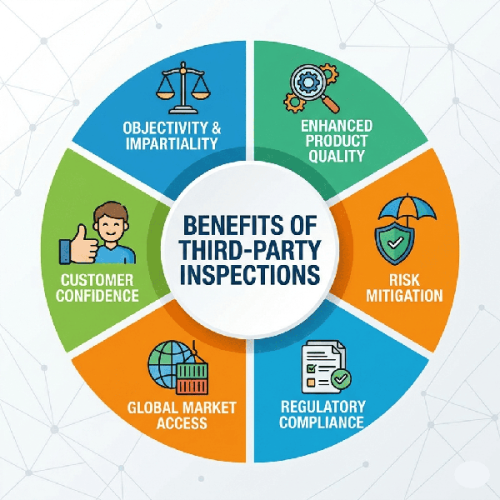
Third-party inspections (TPI) act as an objective "eyes and ears" on the ground, particularly when you are managing international manufacturing or complex supply chains. By involving an independent, qualified agency, you bridge the gap between your quality expectations and the factory's output.
1. Objective Quality Assurance
Internal factory QC (Quality Control) teams often face pressure to meet production quotas, which can lead to "corner-cutting."
-
Impartiality: TPI agents have no financial stake in the factory’s production speed, ensuring they report only the facts.
-
Standardization: They use internationally recognized sampling standards, such as AQL (Acceptable Quality Limit), to determine if a batch is shippable.
2. Risk Mitigation and Cost Savings
Discovering a defect after a shipment has crossed an ocean is a logistical and financial nightmare.
-
Preventing "Dead on Arrival" Stock: Inspections identify issues while the goods are still at the factory, allowing for immediate rework or sorting.
-
Reduced Returns: High-quality consistency lowers the rate of customer returns and protects your brand reputation.
-
Travel Savings: It is significantly more cost-effective to hire a local TPI agent than to fly your own team to a remote manufacturing hub.
3. Supply Chain Transparency
A third-party inspection provides a documented paper trail of the production cycle.
-
Detailed Reporting: You receive comprehensive reports including high-resolution photos, testing results, and packaging checks.
-
Timeline Verification: Inspectors confirm if the factory is actually at the production stage they claim to be, helping you manage your inventory forecasting accurately.
4. Regulatory and Safety Compliance
For industries like electronics, automotive, or textiles, staying compliant with international standards is mandatory.
-
Testing On-Site: Many TPI firms can perform functional tests (e.g., hi-pot tests for electronics, pull-tests for garments) to ensure the product is safe for the end-user.
-
Incoterms & Documentation: They ensure that labeling, barcodes, and shipping marks comply with your specific requirements and international trade laws.

krishna
Krishna is an experienced B2B blogger specializing in creating insightful and engaging content for businesses. With a keen understanding of industry trends and a talent for translating complex concepts into relatable narratives, Krishna helps companies build their brand, connect with their audience, and drive growth through compelling storytelling and strategic communication.