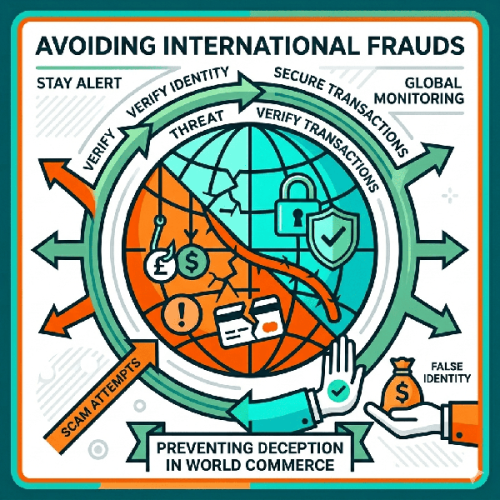
To mitigate risks and protect Agrived Foods from international trade fraud, you must shift from a reactive mindset to a verified, documentation-heavy workflow. In the 2026 trade landscape, fraud is increasingly sophisticated, but it is also easier to detect if you implement structured "trust filters."
1. The "Trust Filter" Protocol (Buyer Verification)
Never move from negotiation to transaction without running the buyer through a three-stage verification process:
-
Digital Footprint Analysis: Do not rely on email communication alone. Cross-reference their domain history, LinkedIn company profiles, and physical addresses (use Google Maps street view to see if the office exists).
-
Official Registry Cross-Check: Request their business registration and import-export license. Verify these against the respective country’s official government portal. If they refuse to provide these or suggest they are "not required," walk away.
-
The "Human" Verification: Always mandate a video call with their procurement team. Ask technical questions about their local market, logistics, or customs requirements. Fraudsters often have polished websites but fail to provide specific, professional answers during live, unscripted conversations.
2. Financial & Payment Security
The most common fraud occurs during the payment phase. Implement these non-negotiable rules:
-
Corporate Banking Only: Never accept payments from or send money to personal accounts, cryptocurrency wallets, or "third-party agents" claiming to act on behalf of the company. Funds must flow through recognized corporate banking channels.
-
Secure Payment Instruments: For new buyers, prioritize Letters of Credit (LC) issued by reputable banks. This ensures payment is contingent upon presenting valid shipping documents.
-
The "Small Sample" Test: If you are unsure about a buyer, start with a high-value, low-volume "trial" order. This allows you to test their communication reliability and payment follow-through without exposing your entire inventory.
3. Documentation Discipline (The "Paper Trail" Shield)
Under the FEMA 2026 regulations, the burden of proof is on the exporter. Documentation is your primary defense:
-
Standardized Contracts: Use formal Proforma Invoices and Purchase Agreements for every order. Ensure these documents detail product specs, quantity, quality standards, and shipping terms (Incoterms).
-
Automated Tracking: Integrate your export documentation with your ERP system. Avoid manual tracking, which is prone to errors that can be flagged as "technical violations" during bank audits.
-
Regulatory Alignment: Align your invoicing, export declarations, and remittances perfectly. Any mismatch between these triggers automated bank inquiries and regulatory scrutiny.
4. Red Flags to Watch For
Be prepared to terminate the conversation immediately if you encounter these classic warning signs:
-
Urgency Pressure: The buyer demands immediate shipment without a formal contract, citing "market opportunities" or "urgent stock requirements."
-
Unrealistic Pricing: A buyer offers significantly above-market rates. If it seems too good to be true, it is likely a setup for a "no-delivery" or "overpayment" scam.
-
Generic Communication: Usage of free email providers (e.g., Gmail, Yahoo) for high-value B2B transactions instead of professional company-branded domains.
-
Third-Party Agent Hurdles: The buyer insists on using unknown or "private" shipping/logistics agents that you have never heard of.
5. Leveraging Expert Resources
-
Export Promotion Councils (EPCs): Use bodies like APEDA or FIEO. They provide databases of verified international buyers and offer guidance on specific market risks.
-
ECGC Credit Reports: Utilize the Export Credit Guarantee Corporation of India (ECGC) to assess the creditworthiness of your buyers. They can provide reports on how a buyer has historically paid other Indian exporters.
-
Authorized Dealer (AD) Banks: Your bank is your partner. Consult them early regarding new clients in "high-risk" geographies to understand the local regulatory hurdles.

krishna
Krishna is an experienced B2B blogger specializing in creating insightful and engaging content for businesses. With a keen understanding of industry trends and a talent for translating complex concepts into relatable narratives, Krishna helps companies build their brand, connect with their audience, and drive growth through compelling storytelling and strategic communication.